Tulu Purse
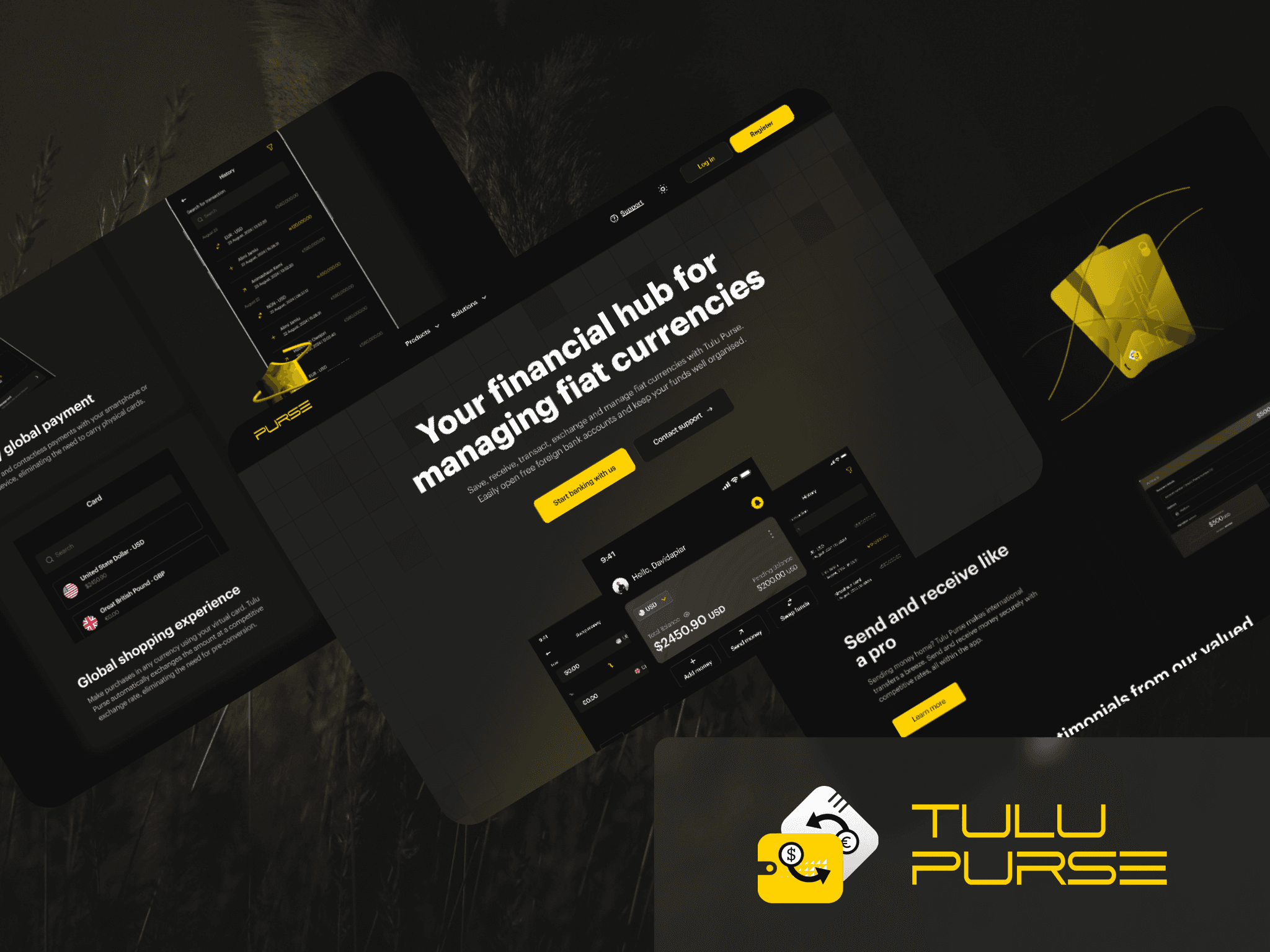
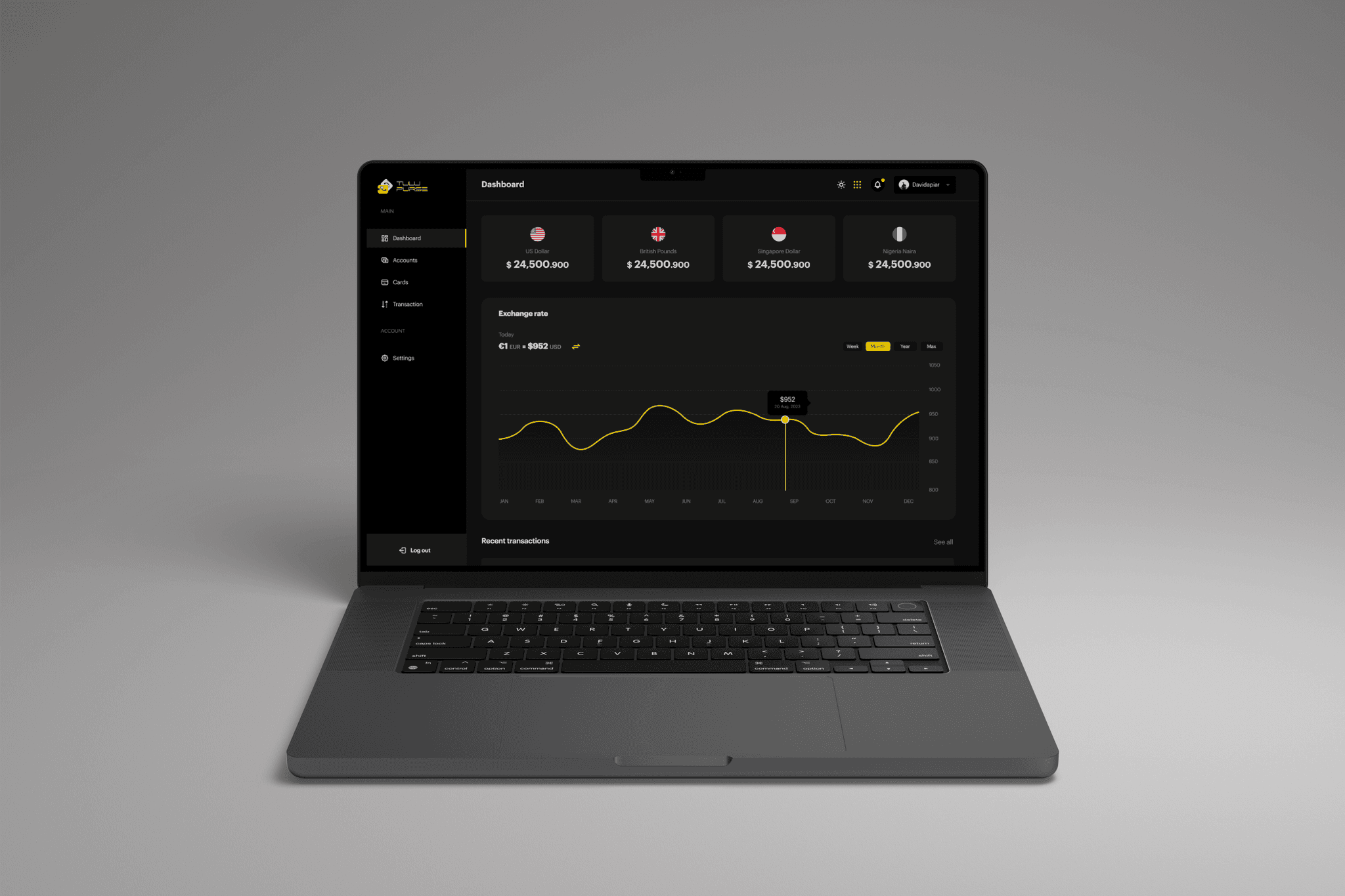
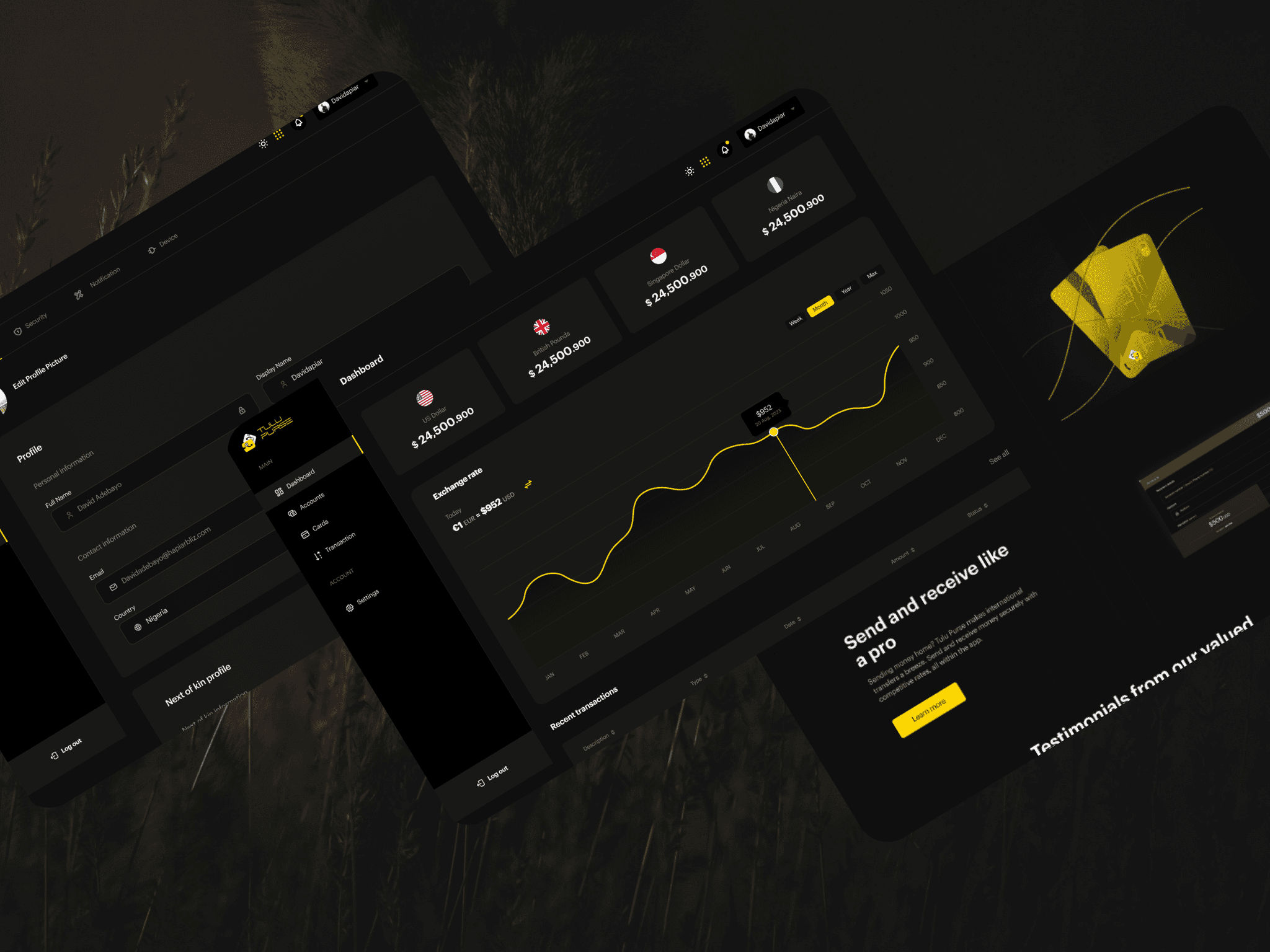
Tulu Purse is a digital financial tool within the Tulupay Ecosystem, designed for individuals and businesses across Africa to manage, save, and transact in multiple fiat currencies, seamlessly and securely. From freelancers to SMEs, it bridges the gap in cross-border financial access while reducing reliance on costly, complex banking systems.
Client
MSMEs Ecosystem
Service Provided
Website Design, Web Application, Mobile Application
The Problem
The goal was to simplify multi-currency financial management, enable secure and real-time savings and transactions, and create a trustworthy, intuitive interface that both educates and empowers users. Additionally, the product needed to be fully accessible across devices, offering a seamless experience on both desktop and mobile platforms.
The goal was to simplify multi-currency financial management, enable secure and real-time savings and transactions, and create a trustworthy, intuitive interface that both educates and empowers users. Additionally, the product needed to be fully accessible across devices, offering a seamless experience on both desktop and mobile platforms.
Users in emerging markets often manage money across fragmented platforms with poor visibility and unclear transaction feedback. This creates anxiety, low trust, and hesitation—especially when real money is involved.
From a product standpoint, the problem broke down into three layers:
User Problems
Difficulty understanding balances and transaction states
Fear of failed or delayed transactions
Low tolerance for confusing flows
Limited patience for learning complex fintech interfaces
Market Constraints
Users think in local currency first (NGN, KES)
Financial literacy levels vary widely
Trust is built through clarity and predictability, not branding
System & Business Constraints
The wallet needed to support fiat immediately
Architecture had to be modular for future digital assets
Compliance and security considerations had to be embedded, not surfaced aggressively
Core question:
How can a wallet feel simple and familiar to everyday users while quietly handling complex fintech logic behind the scenes?

My Role & Ownership
I worked as the sole Product Designer, owning the product end-to-end from definition to execution.
Responsibilities included:
Product thinking and feature definition
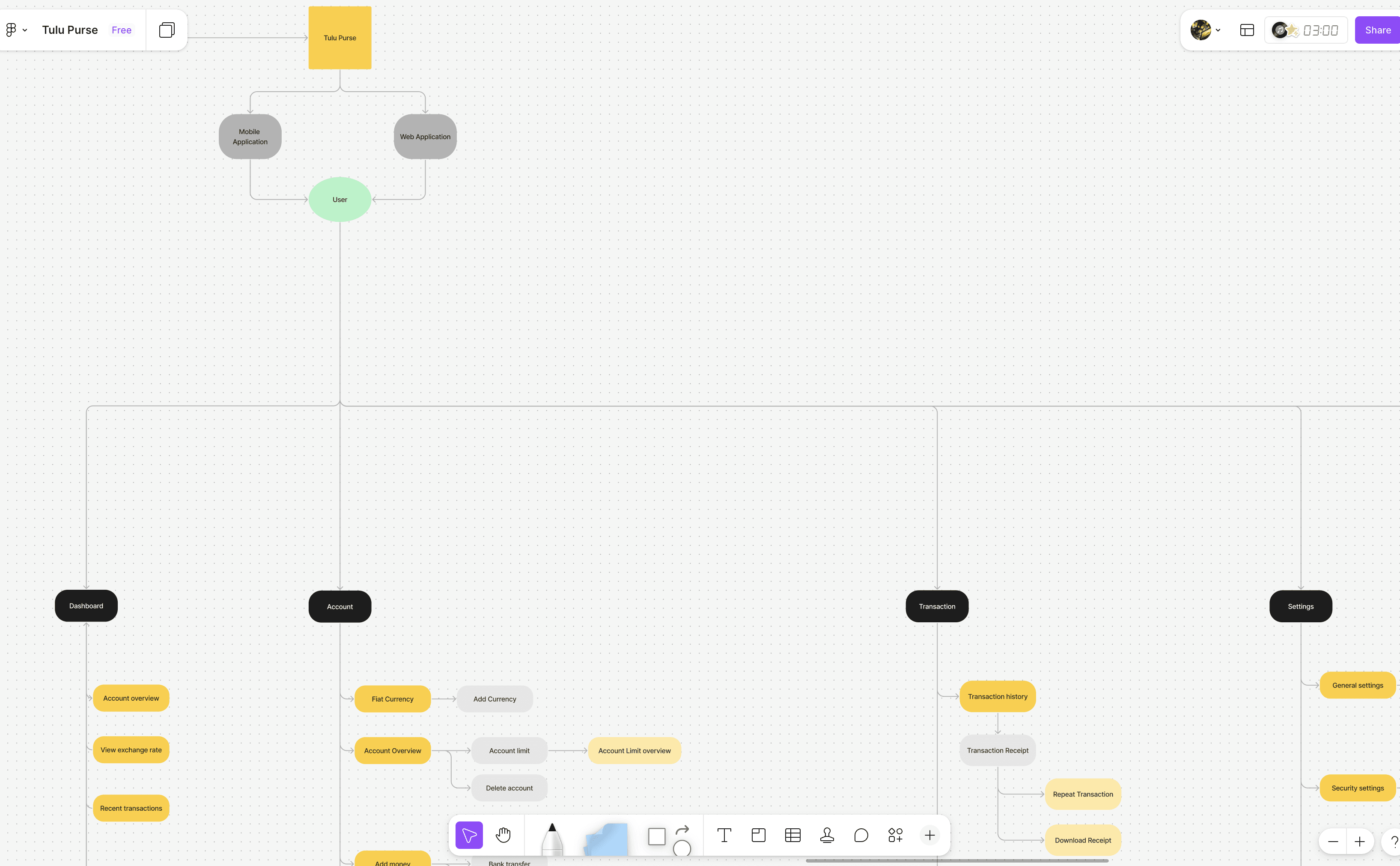
User flows and information architecture
End-to-end UX/UI design
UX writing and microcopy
Designing for trust, compliance, and scalability
Translating technical constraints into user‑friendly experiences
This role required balancing user needs, system logic, and long‑term product growth, without sacrificing clarity.
Product Strategy & Design Principles
Rather than starting with screens, the product was guided by clear design principles:
Clarity over cleverness
Interfaces should explain themselves without instruction.Trust is a design outcome
Predictable layouts, clear feedback, and calm microcopy reduce anxiety.Progressive disclosure
Complexity is introduced only when users are ready for it.Localization beyond visuals
Currency, language tone, and error handling reflect local realities.
These principles influenced every layout, interaction, and line of copy.
1
Core Features & Functional Scope
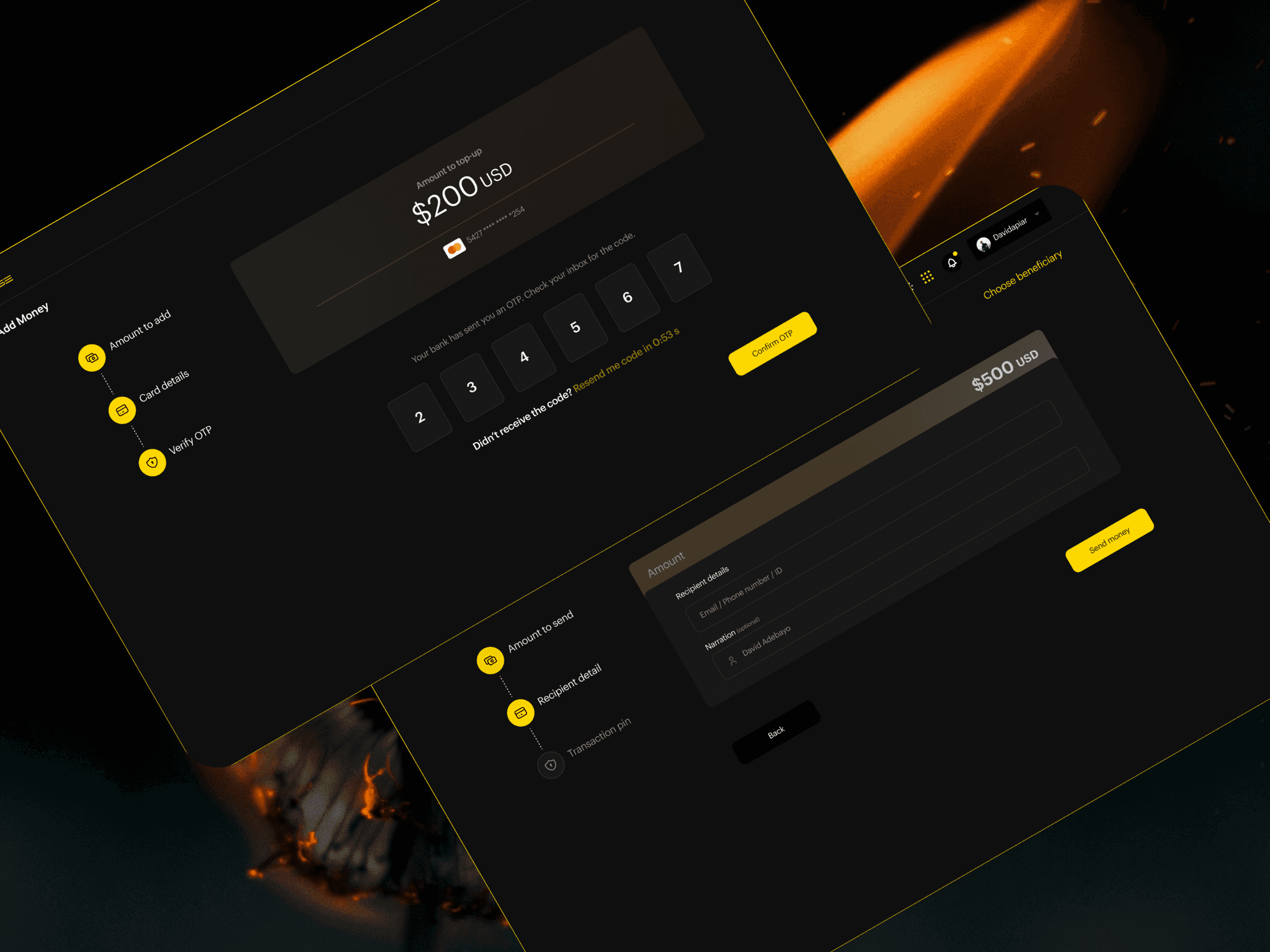
Tulu Purse was designed around essential wallet capabilities, nothing more, nothing less.
Wallet Fundamentals
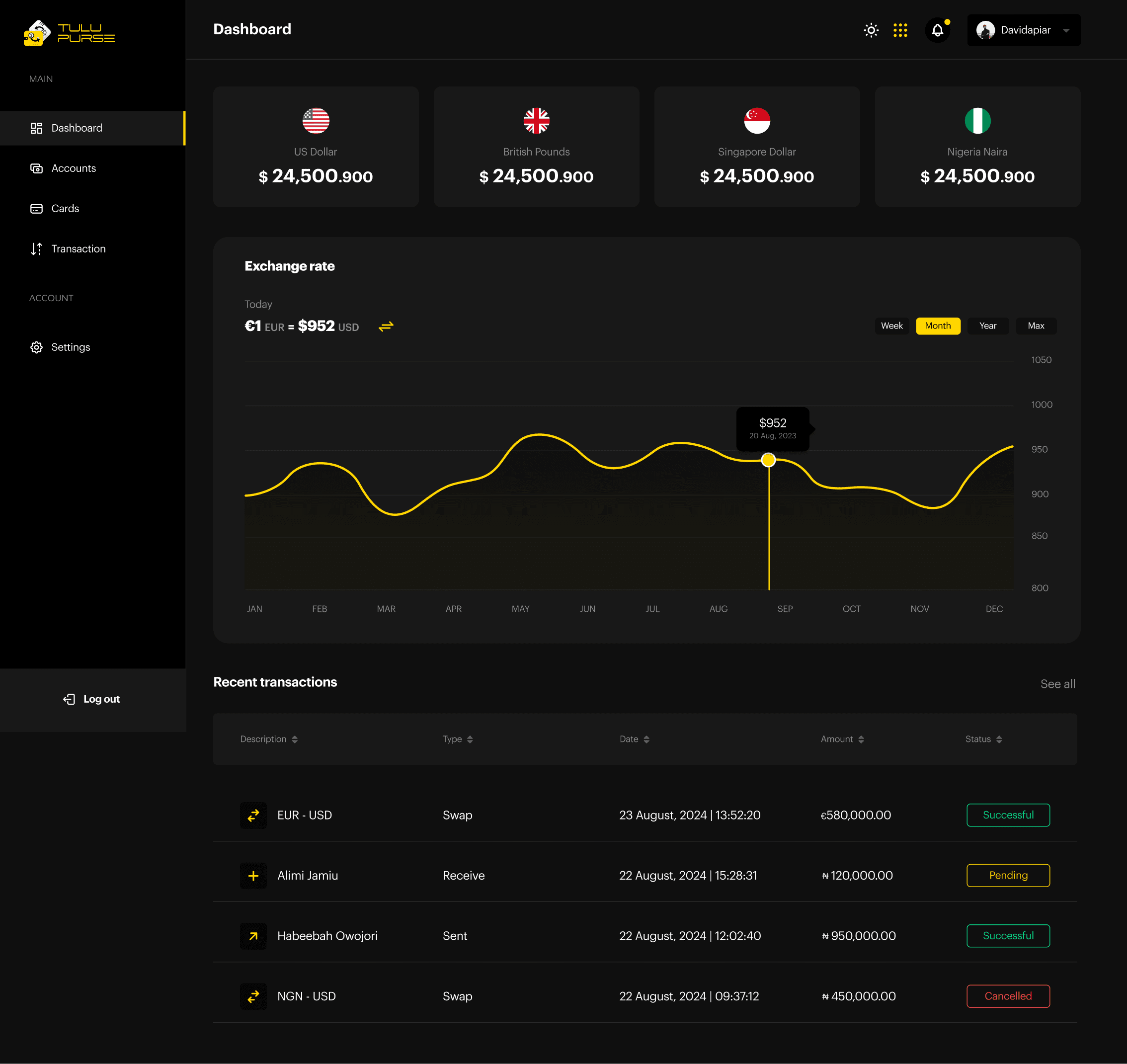
Clear balance visibility
Separation of currencies and assets
Immediate access to key actions
Transactions
Send funds
Receive funds
Transaction history with clear status indicators
Fiat Handling
Explicit support for Naira (NGN) and Kenyan Shilling (KES)
Clear labeling to prevent currency confusion
Familiar money representation aligned with user expectations
Trust & Confirmation Layers
Confirmation steps for sensitive actions
Clear system feedback at every transaction stage
Calm, informative microcopy for errors and delays
Key User Flows
Onboarding & First Use
The onboarding experience was designed to reduce friction and help users understand the wallet without overwhelming them.
Minimal steps
Immediate value visibility
No unnecessary setup before interaction
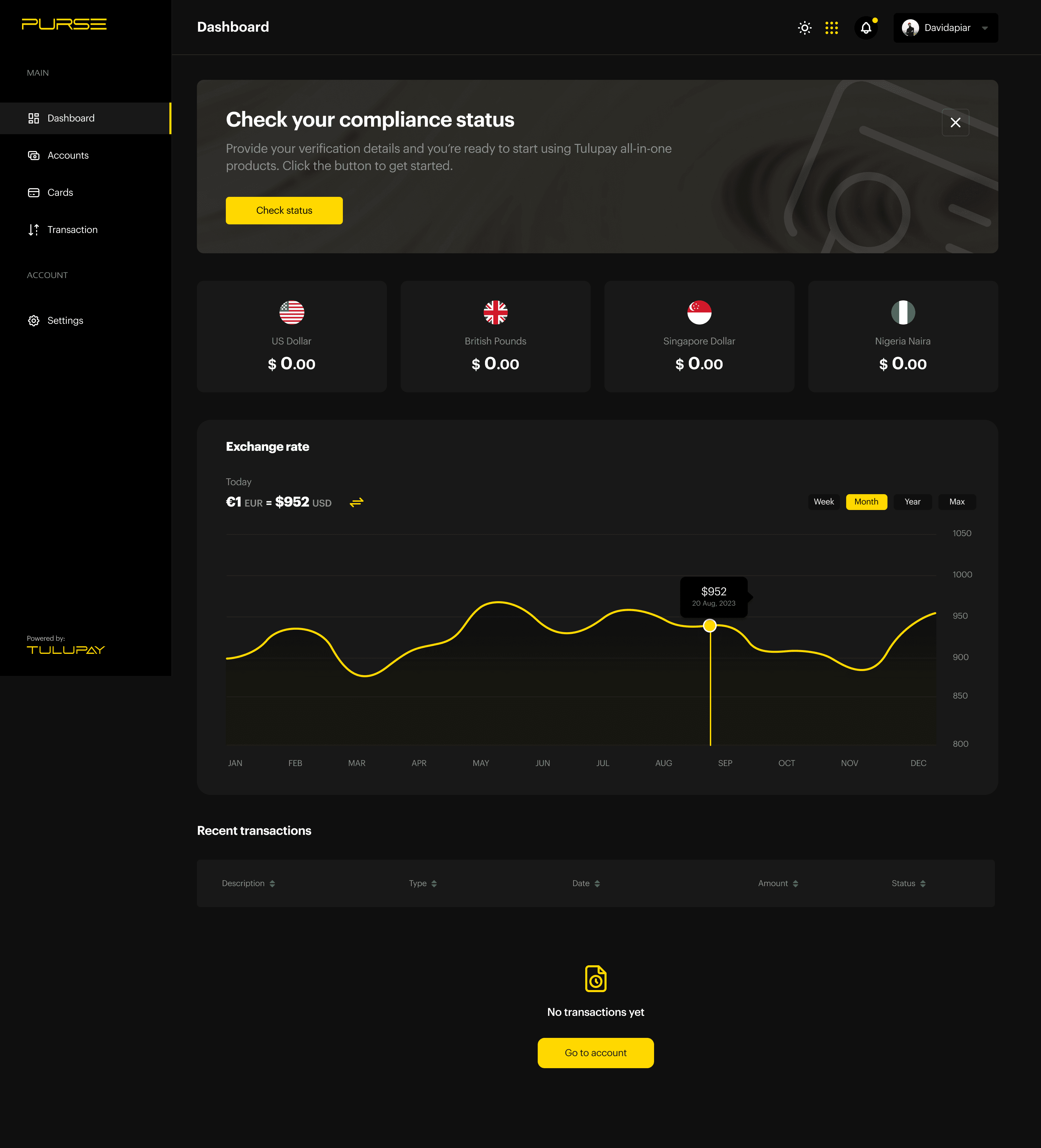
Sending Funds
Sending money is a high‑anxiety action. The flow prioritizes reassurance and clarity.
Clear input states
Review and confirmation before execution
Explicit transaction status feedback
Design decision: Add confirmation layers not as friction, but as reassurance.
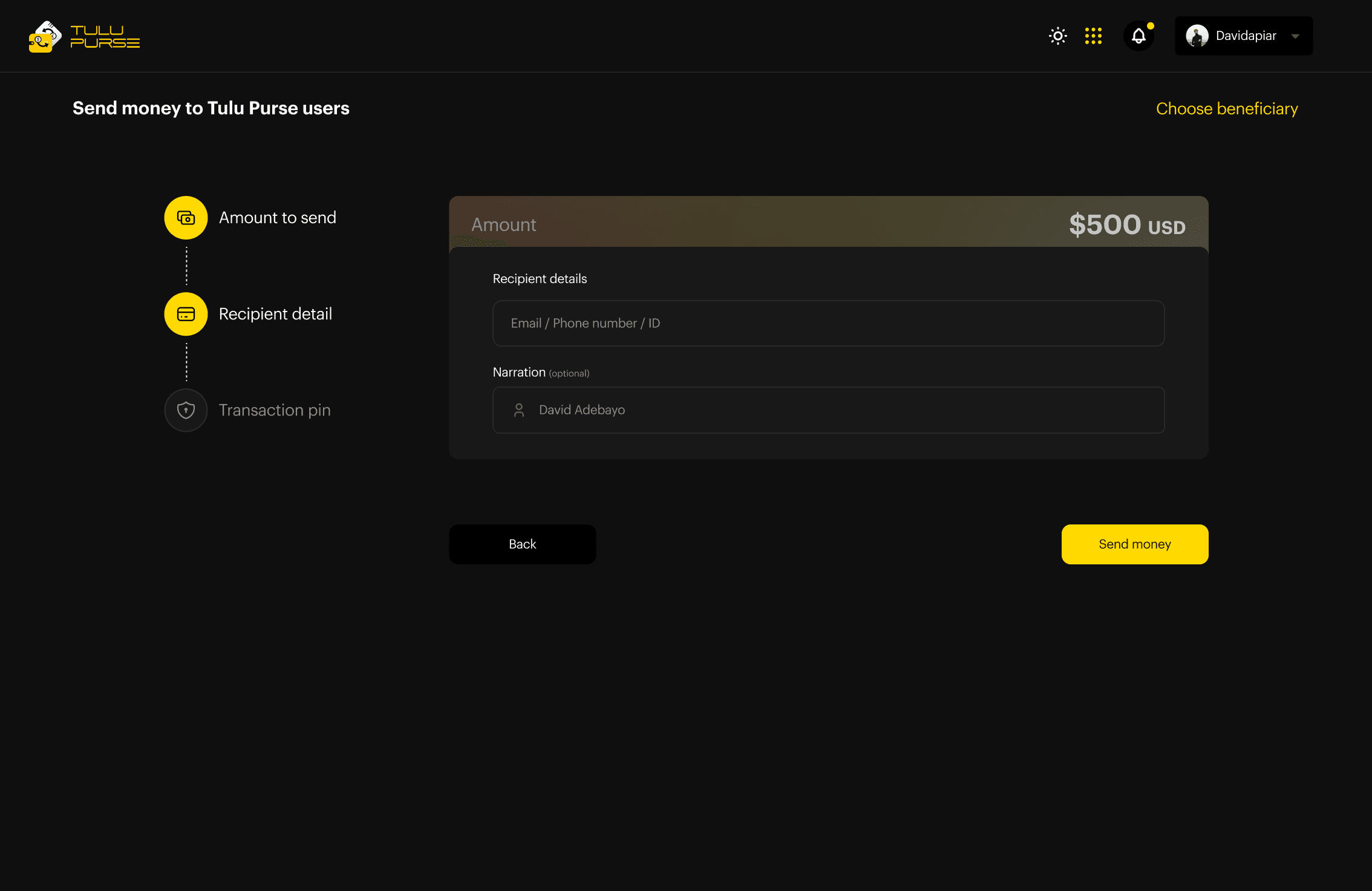
Receiving Funds
Receiving funds is designed to feel passive and stress‑free.
Clear wallet identifiers
Simple receive states
Immediate transaction visibility
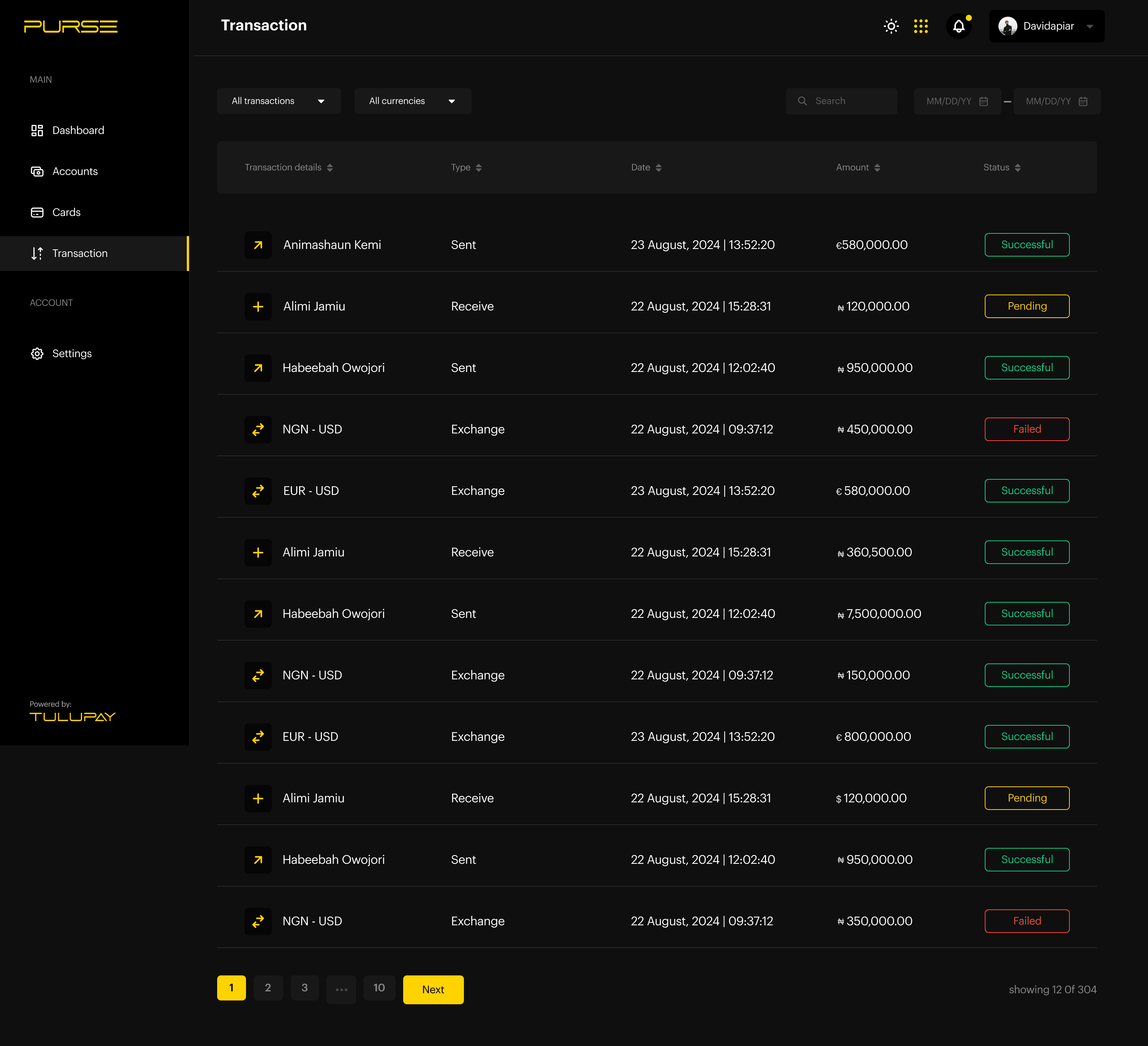
Transaction History
Transaction history was designed for scannability, not analysis.
Clear status indicators (successful, pending, failed)
Timestamp clarity
Reduced cognitive load
UX Writing & Microcopy
Microcopy played a critical role in reducing user anxiety.
Focus areas:
Explaining what’s happening in real time
Setting expectations during delays
Avoiding blame or technical jargon
Guiding users through errors constructively
This ensured the product felt supportive rather than transactional.
Trust, Security & Compliance by Design
Rather than exposing compliance complexity, trust was communicated subtly through:
Consistent layouts
Predictable action placement
Clear confirmations for irreversible actions
Calm visual language
Security was treated as a background guarantee, not a foreground burden.
2
Outcome
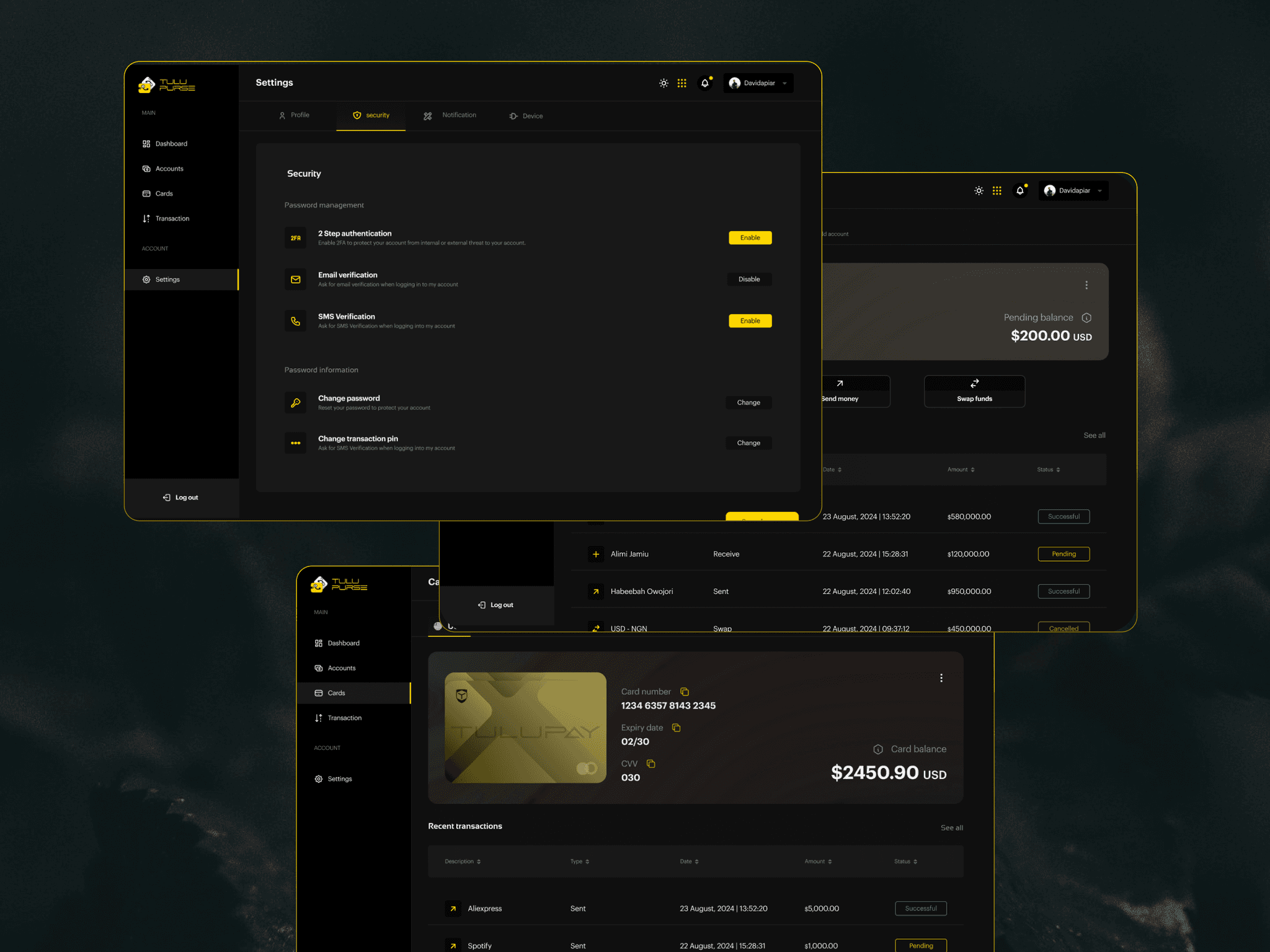
While quantitative metrics were unavailable, the design delivered:
A scalable wallet foundation for the Tulupay ecosystem
A clear, intuitive experience for everyday users
A modular structure ready for future currencies and products
Improved perceived trust through clarity and consistency
Key Learnings
Trust is earned through predictable design, not features
Simplicity requires deliberate trade‑offs
Microcopy is critical in financial products
Designing for emerging markets demands contextual empathy
Final Reflection
Tulu Purse strengthened my approach to product‑led fintech design, where user confidence, system constraints, and future scalability are treated as equally important. The project reinforced my ability to design calm, trustworthy financial products in complex environments.
3
Recent Designs