Career Box
CareerBox is a next-gen recruitment platform built to connect global talents with recruiters through intelligent, AI-driven matchmaking. Unlike traditional job boards, CareerBox serves both employers and job seekers with equal depth offering tools to post, apply, track, and hire seamlessly in one place.
Client
MSMEs Ecosystem
Service Provided
Web Design, Web Development
The Problem
Traditional job boards often prioritize volume over relevance. Recruiters receive large numbers of applications that are poorly aligned with role requirements, while job seekers struggle to find opportunities that truly match their experience and career goals.
For CareerBox, this resulted in:
Low-quality matches
Increased recruiter screening time
Talents applying to roles they allowed to see but weren’t suitable for
The challenge was to design an experience that encouraged better data input from users without increasing friction—so the AI could generate more accurate matches for both sides.

Users & Use Cases
CareerBox was designed for two primary user groups with distinct motivations:
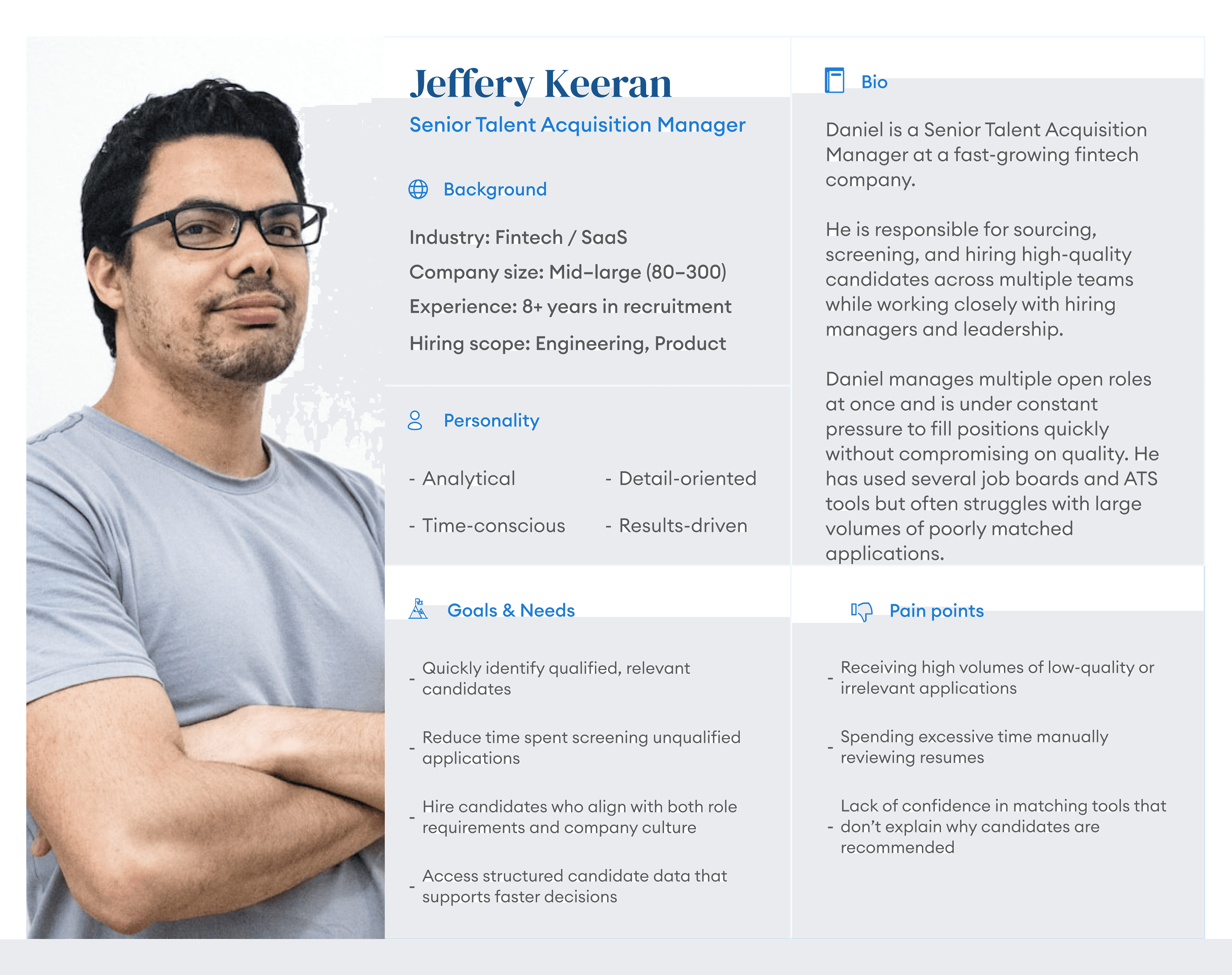
Recruiters
Want to quickly identify candidates who closely match role requirements
Need tools that reduce screening time and improve hiring confidence
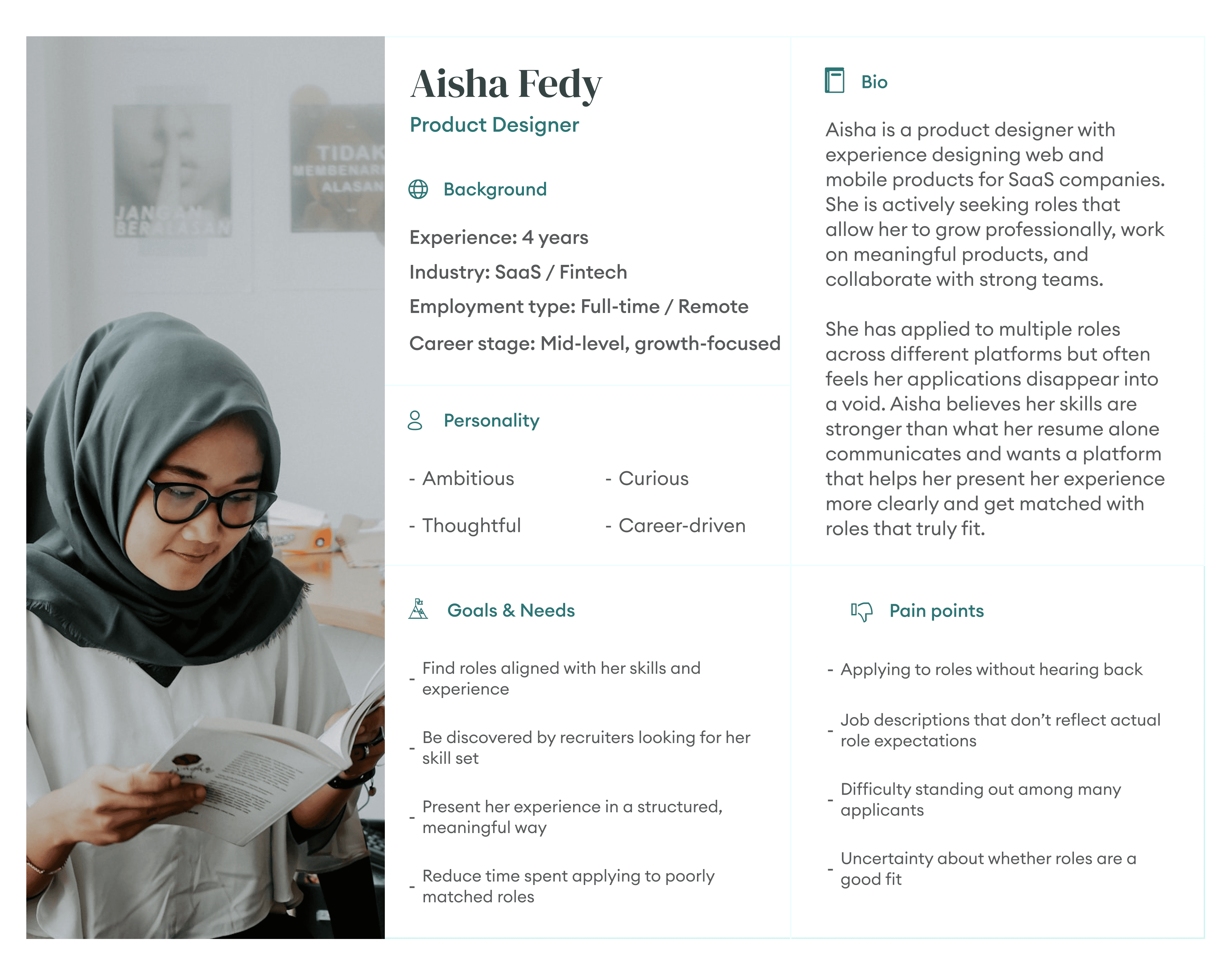
Talents (Job Seekers)
Want visibility into opportunities that align with their skills and goals
Need guidance in presenting their experience in a way that improves match accuracy
Each experience was intentionally designed to support the shared goal of better-quality matches, while respecting the unique needs of each user group.
My Role & Collaboration
I worked as a Product Designer within a cross-functional team, collaborating closely with stakeholders, developers, and QA throughout the design and implementation process.
My responsibilities included:
Designing end-to-end user flows for both recruiters and talents
Structuring onboarding experiences to support AI-driven matching
Crafting microcopy to reduce friction and improve clarity
Working with developers to ensure design feasibility
Iterating designs based on testing feedback and edge cases
This collaboration ensured design decisions were aligned with business goals, technical constraints, and real user needs.
1
The Challenge:
One of the main challenges in designing CareerBox was balancing data quality with user effort. Improving match accuracy required structured, detailed information from users, but asking for too much upfront risked increasing drop-off during onboarding.
Additional challenges included:
Designing for two distinct user groups with opposing workflows
Ensuring AI-driven recommendations felt trustworthy and transparent
Maintaining clarity across complex flows without overwhelming users
Every design decision needed to improve match quality without introducing friction or confusion.
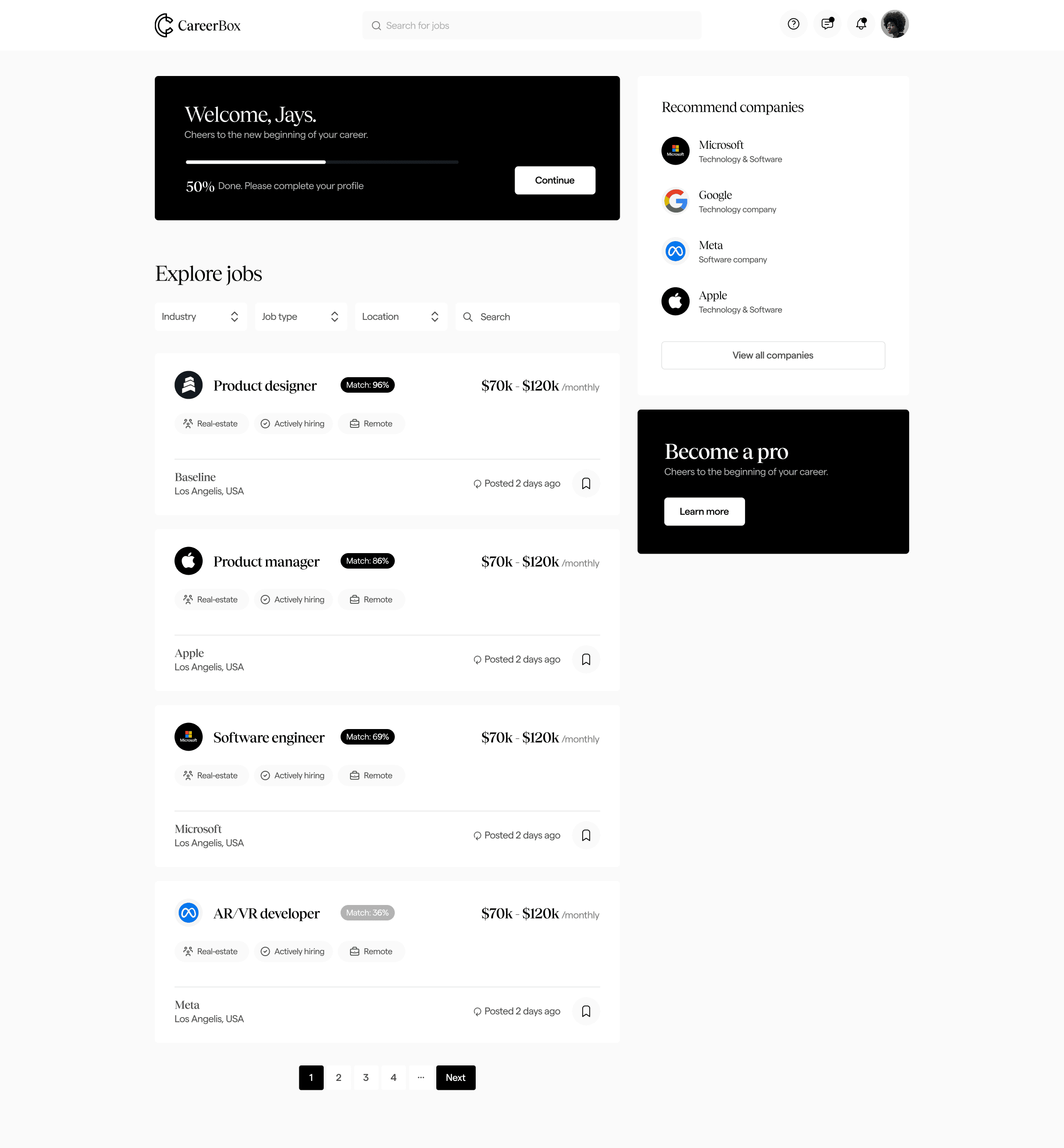
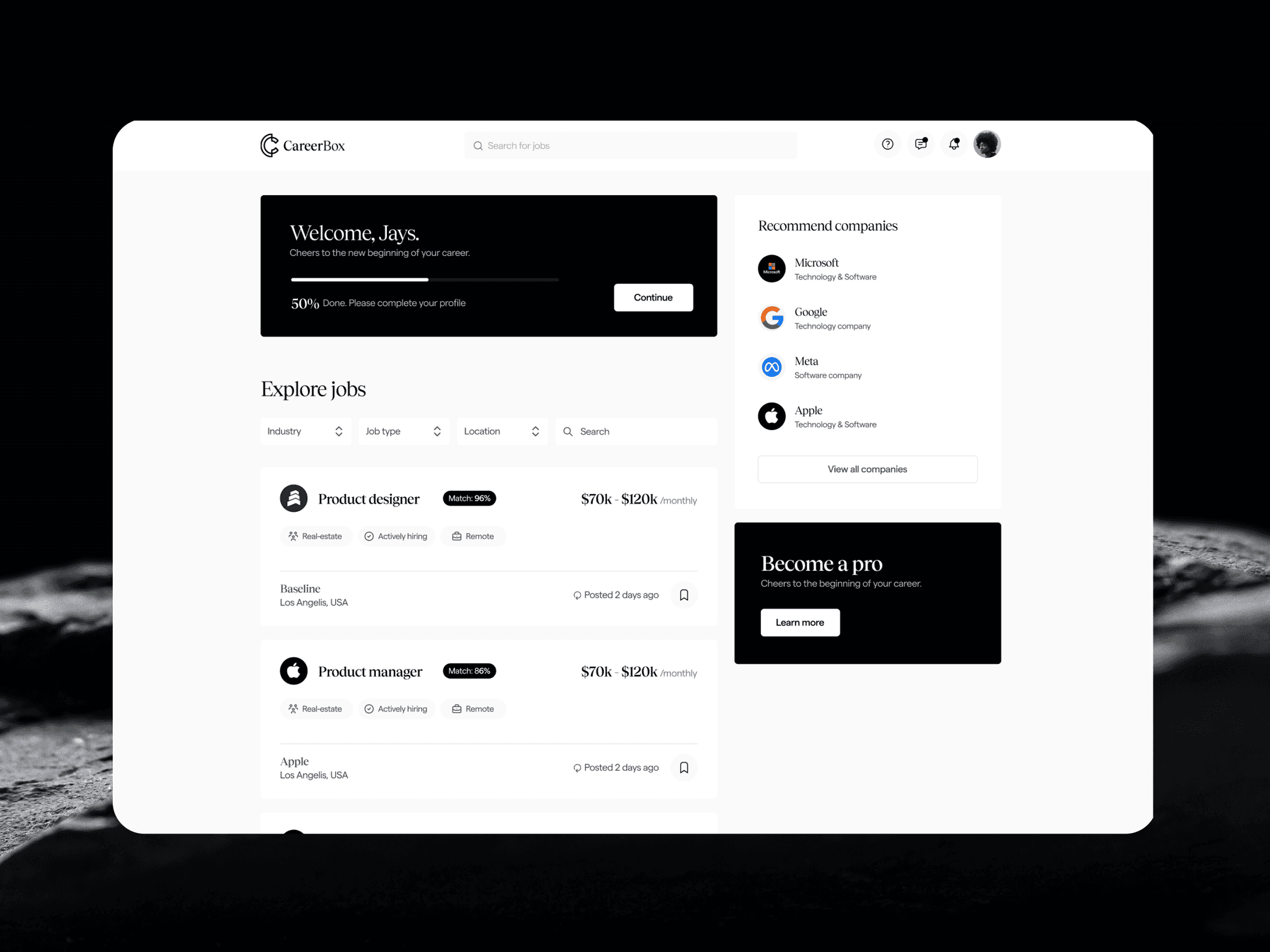
Talent Home Screen
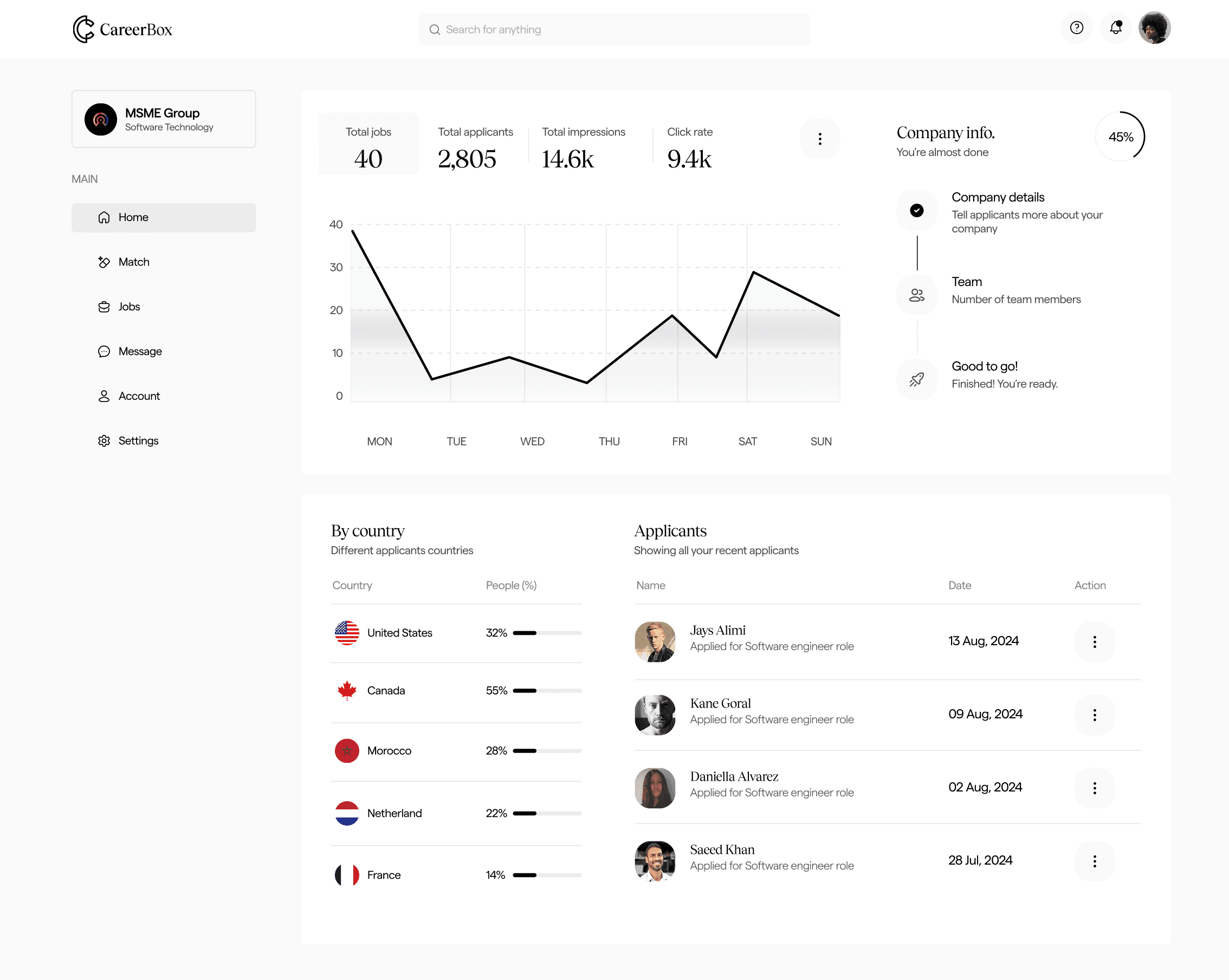
Recruiter Home screen
Key Product Decisions
To improve candidate–job matching quality, I focused on three key product decisions:
Structured onboarding over free-form input
Distinct experiences for recruiters and talents
Clear microcopy to guide user decisions
These decisions ensured that the AI system had access to consistent, high-quality data while keeping the experience intuitive for users.
Talent Onboarding
Talent onboarding was designed to help job seekers clearly communicate their experience while minimizing cognitive load.
Instead of asking users to upload resumes and hope for accurate parsing, the onboarding flow guided talents through structured inputs such as:
Role interests
Work experience
Location preferences
Company size preferences
This approach improved data consistency and increased the AI’s ability to generate relevant job matches.
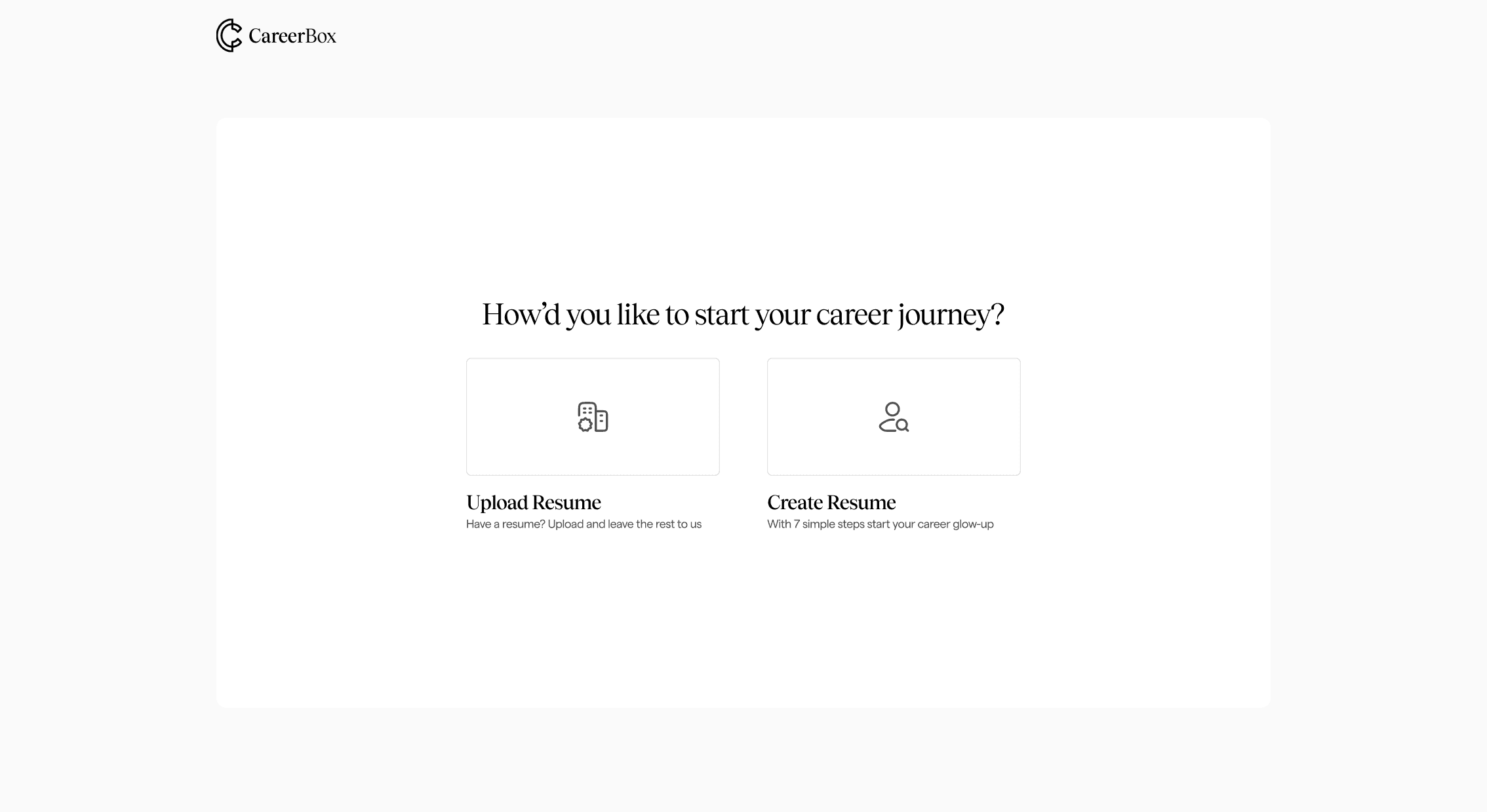
Talent - Onboarding User
Recruiter Onboarding
Recruiter onboarding focused on understanding hiring intent early, so candidate recommendations could align with real role requirements.
Recruiters were guided through setting:
Role types
Experience levels
Hiring locations
Company size and hiring urgency
This ensured that candidate recommendations were based on context, not just keywords.
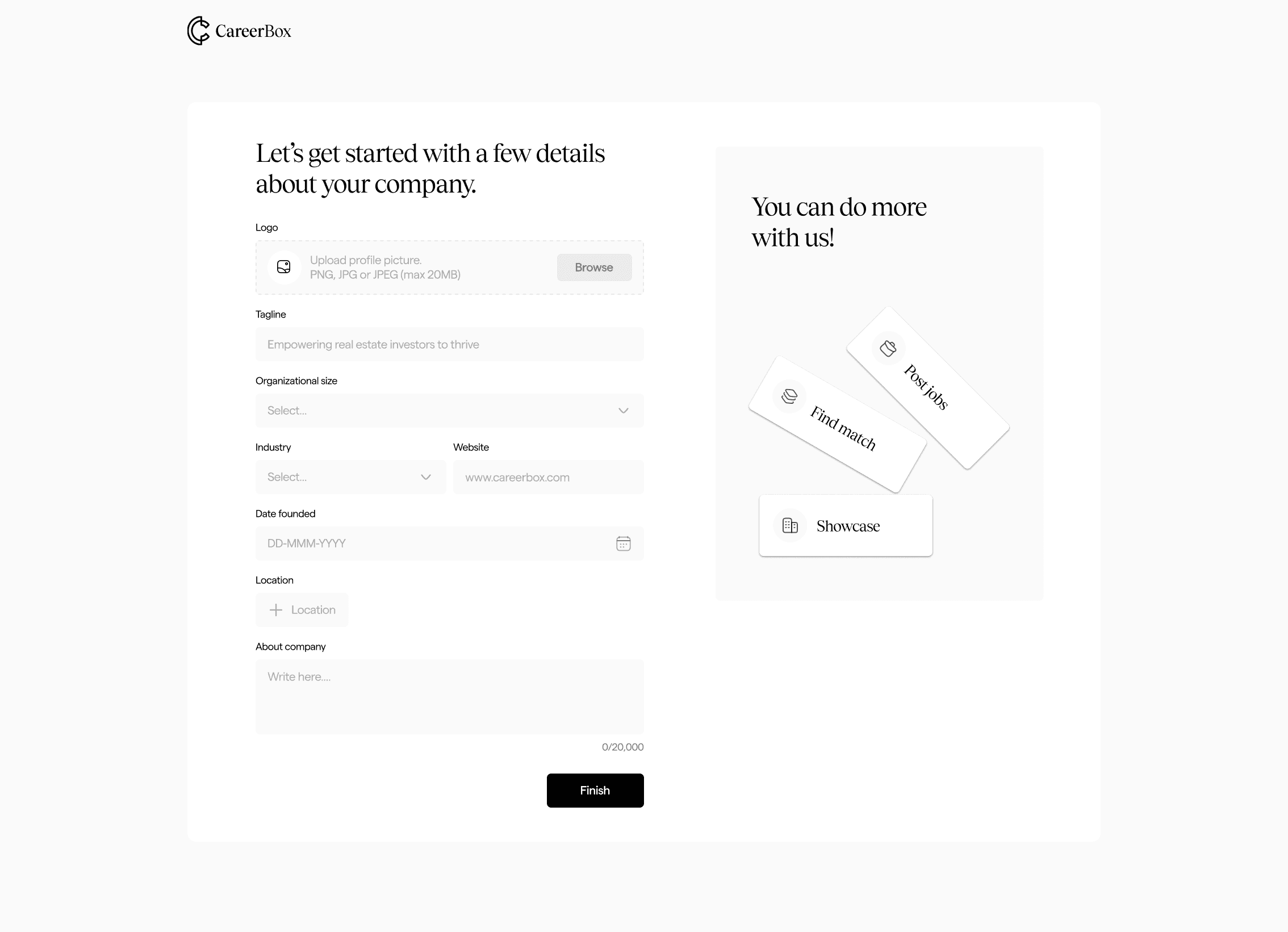
Recruiter - Onboarding User
AI-Driven Matching Considerations
AI-driven matching was only as effective as the data it received. My role was to design experiences that encouraged accurate, intentional input from both recruiters and talents.
To support trust in AI recommendations:
Inputs were clearly explained
Ambiguous fields were avoided
Users were guided with contextual hints
This reduced mismatches and helped users understand how their inputs influenced outcomes.
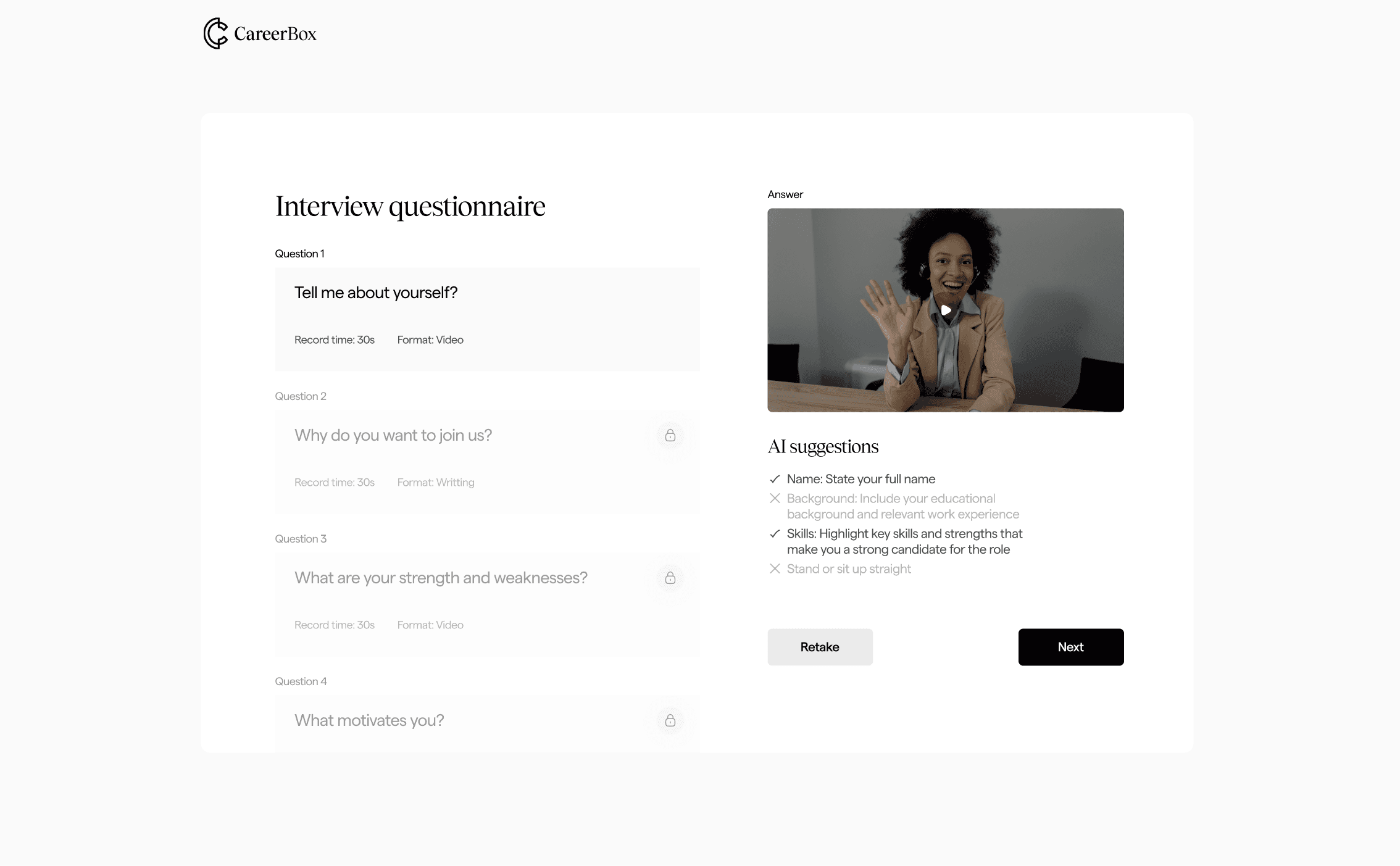
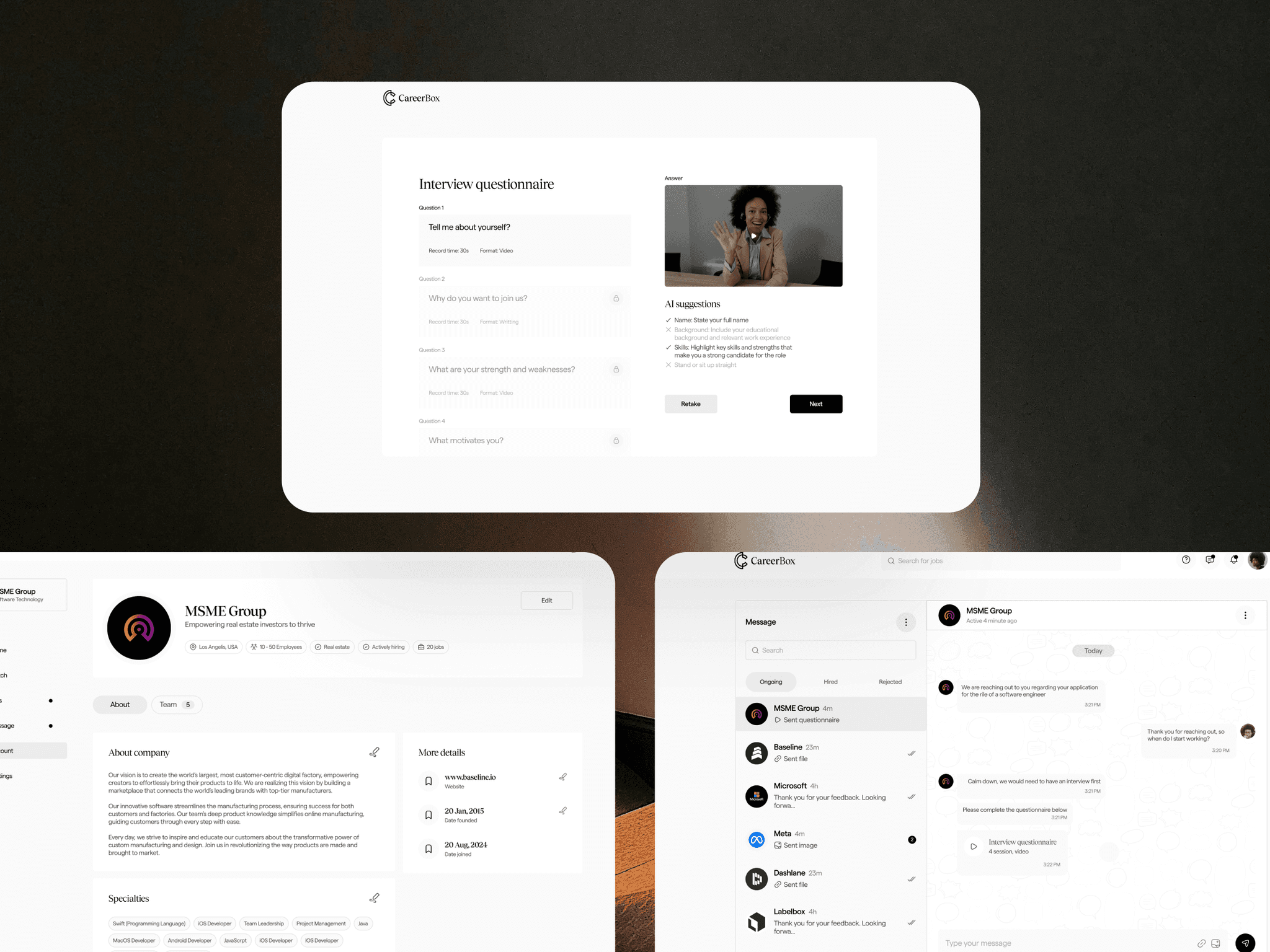
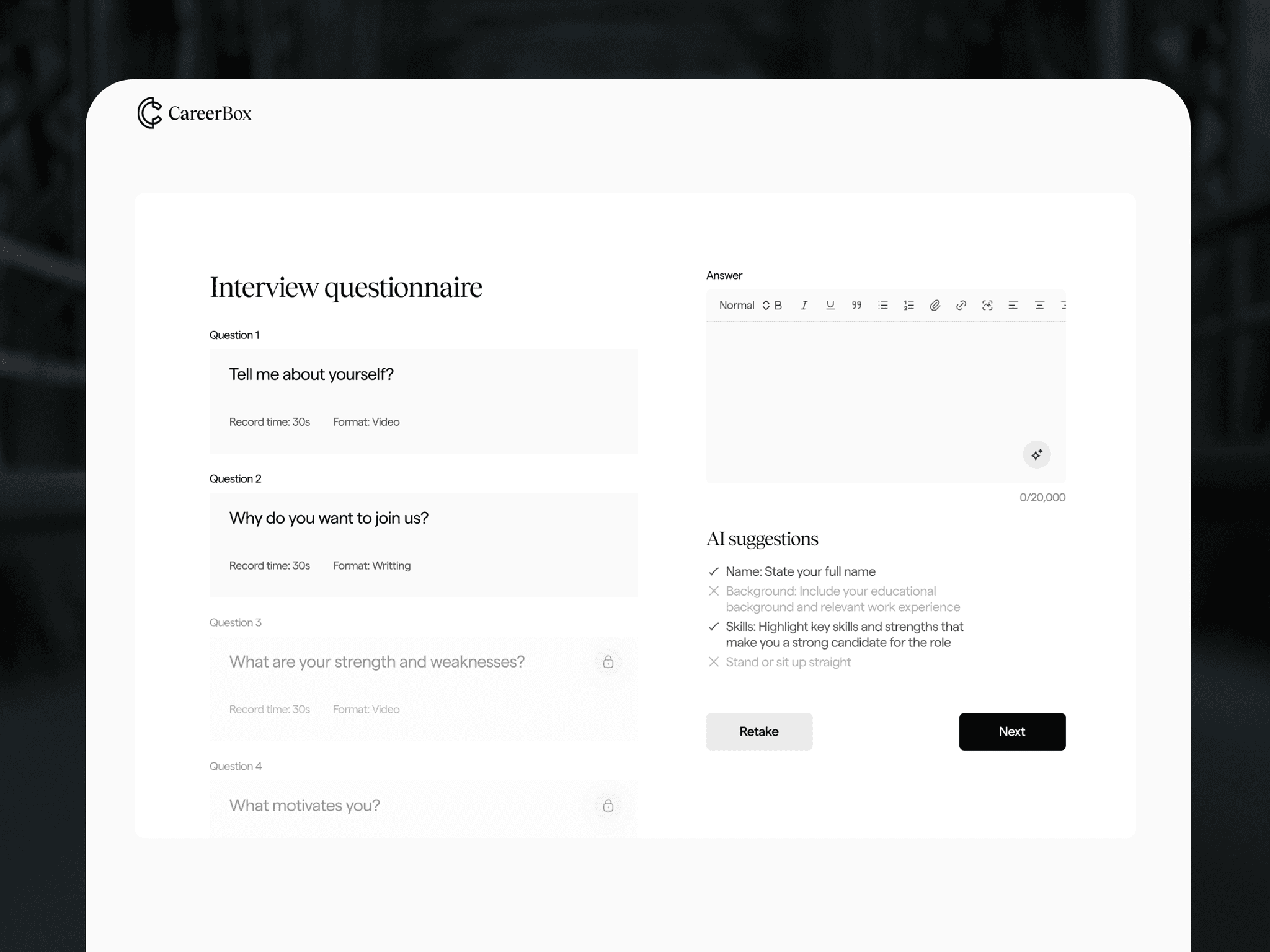
Interview questionnaire
Microcopy & UX Clarity
Microcopy played a key role in reducing friction across the platform. I focused on making actions, consequences, and intent clear, especially in moments that required user trust.
Examples included:
Clear confirmation messaging for destructive actions
Friendly onboarding prompts to encourage completion
Simple language for security and account settings
These small decisions helped users move forward confidently without hesitation.
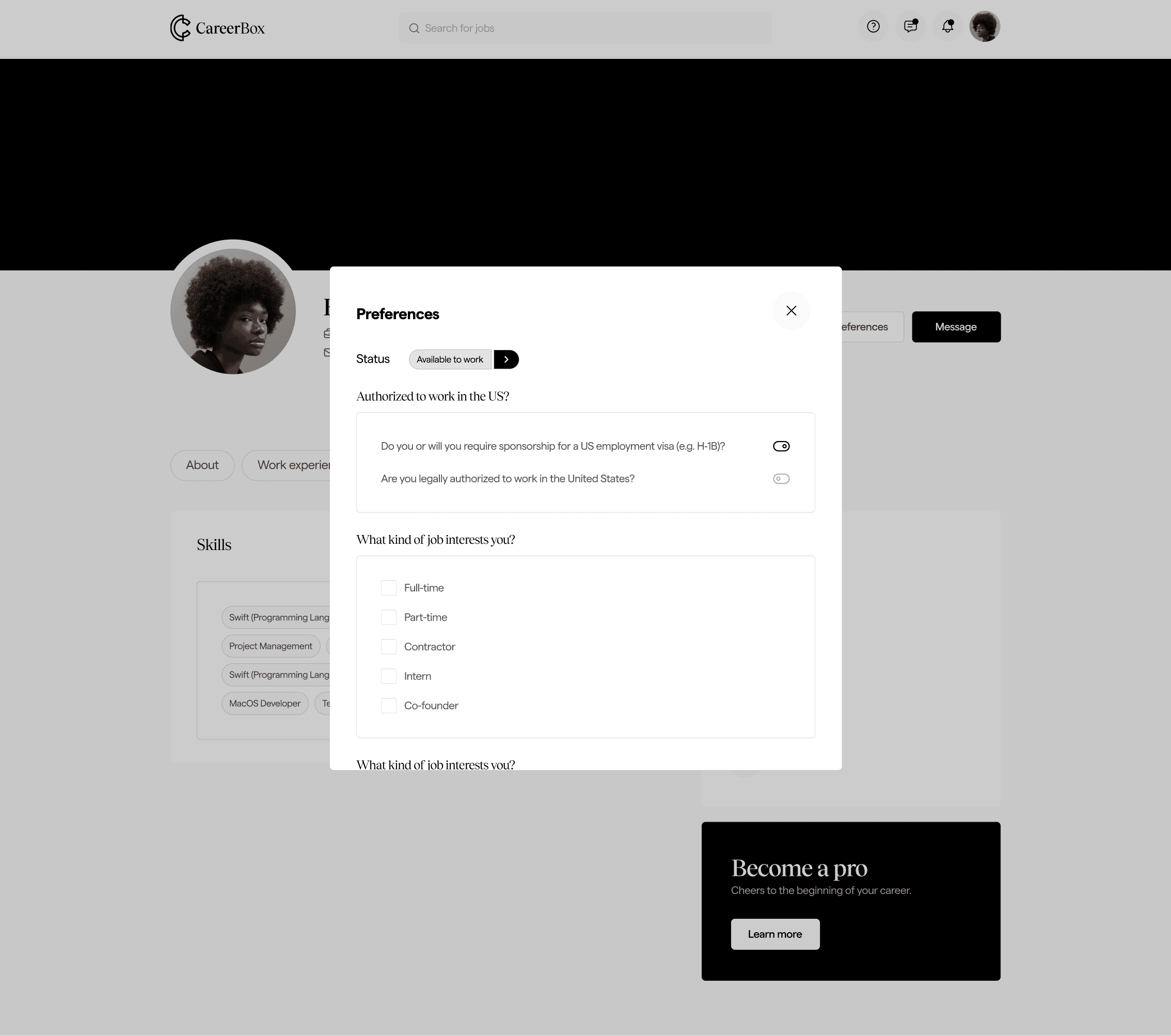
Talent Preference setting
Cross-Functional Collaboration
Throughout the project, I worked closely with stakeholders, developers, and QA to ensure designs were both user-centered and technically feasible.
This included:
Aligning design decisions with business goals
Collaborating with developers to refine edge cases
Iterating on flows based on testing feedback
This collaboration helped ensure that design intent translated effectively into the final product.
2
Outcome
CareerBox launched with a clear, structured experience for both job seekers and recruiters, establishing a strong foundation for AI-driven matching.
The product enabled:
Clear talent and recruiter onboarding flows
Structured data collection to support matching accuracy
A scalable design system that could evolve alongside the platform
Alignment between business goals and user needs from the initial release
Key Learnings
Designing CareerBox reinforced the importance of aligning user experience with data quality—especially in AI-driven products.
Key learnings from this project included:
AI effectiveness depends on UX clarity:
Poorly designed inputs lead to poor recommendations, regardless of algorithm strength.Structure doesn’t have to feel restrictive:
With the right microcopy and flow, structured onboarding can feel supportive rather than demanding.Two-sided platforms require balance:
Optimizing for one user group at the expense of the other weakens the entire system.Collaboration improves outcomes:
Early and continuous collaboration with developers and QA helped surface edge cases and improve design feasibility.
These learnings continue to influence how I approach complex, data-driven products.
3
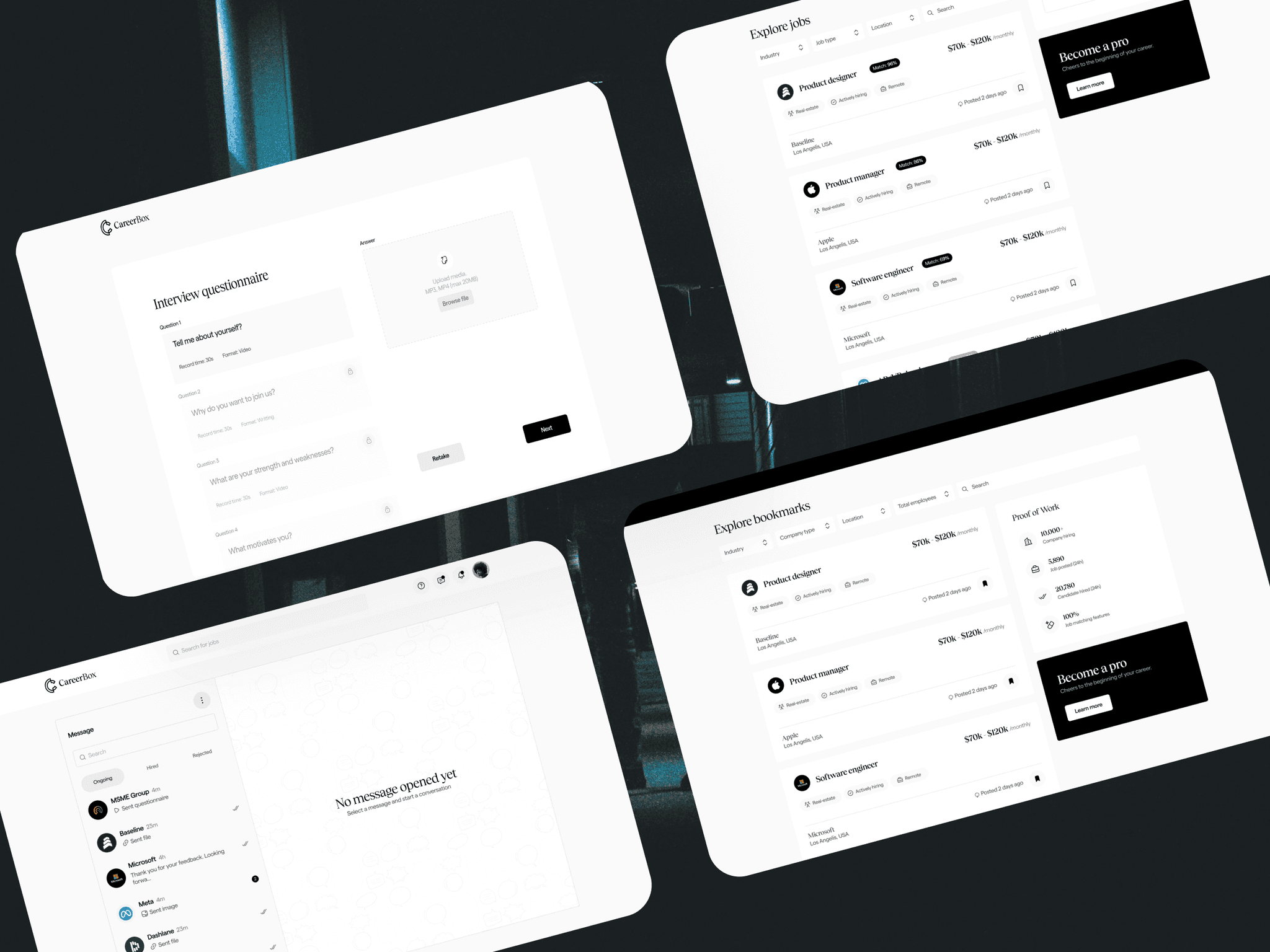
Recent Designs